09/03/2026
The five-minute jobs that turn into five-hour problems
You know the one. A hinge that’s gone loose, a tap that won’t stop dripping, a drawer that sticks every time you open it, a screw that keeps working its way back out. None of it looks urgent. So it waits.
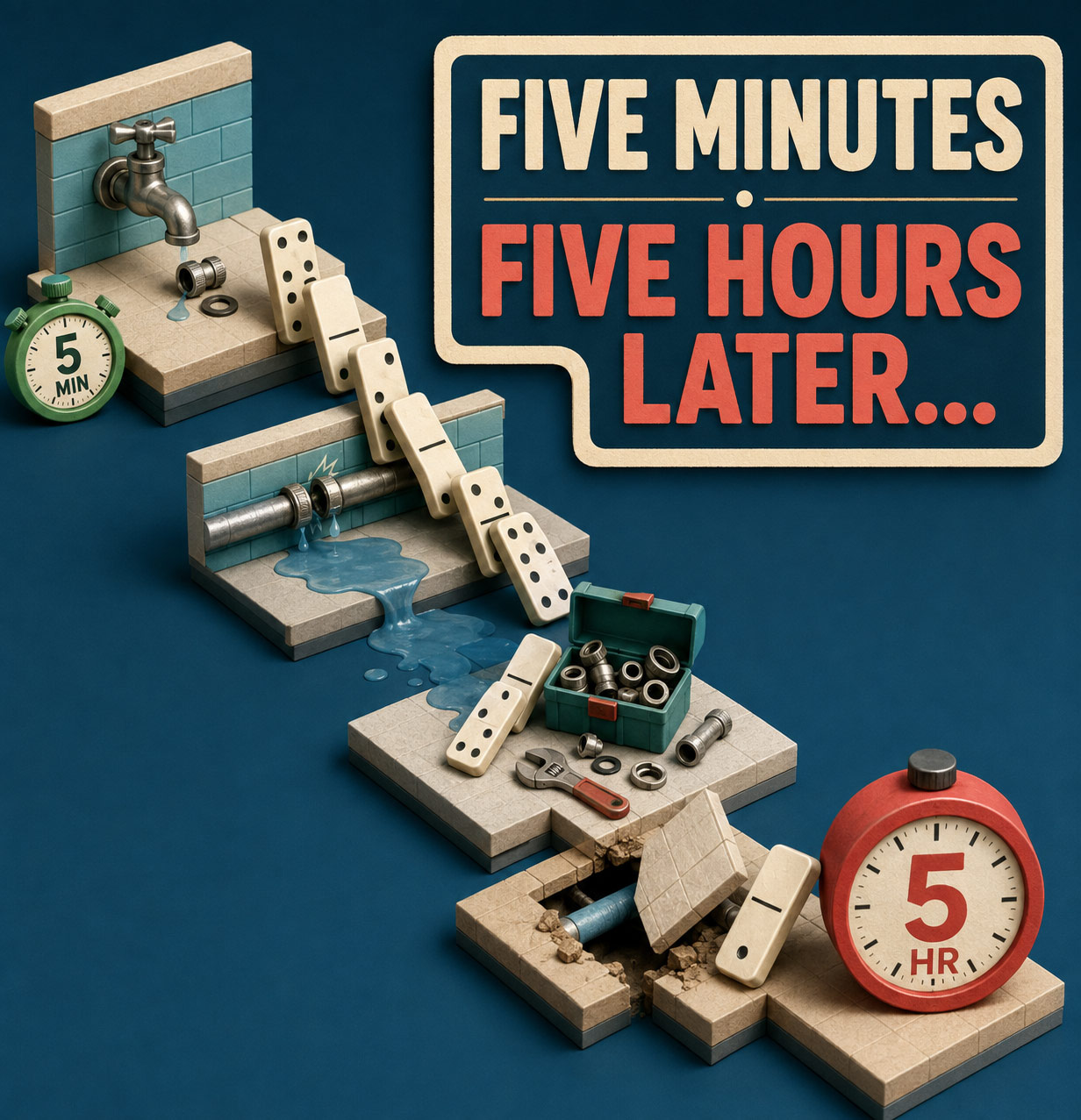
Then one day it’s not five minutes anymore – it’s an afternoon you didn’t plan for.
Usually it’s not the original problem that causes the trouble. It’s what happens in the meantime, while it sits there getting ignored, or gets rushed through without the right prep.
Loose things don’t tend to fix themselves
A bit of wobble tends to invite more wobble. That loose screw widens its own hole a little more every time it’s used. A bracket that’s not quite steady starts pulling on the fixings around it. A handle that shifts under your hand can wear down the surface it’s mounted on, bit by bit.
What could’ve been a two-minute tighten turns into new fittings, extra repairs, and a job that eats your whole Saturday morning. Catching it early is almost always the easier road.
Rushing has a way of creating its own problem
Because these jobs feel small, people treat them that way – no real measuring, whatever tool’s closest to hand, a few steps skipped because how hard can it be?
That’s usually the moment a screw head strips, a surface gets scratched, something gets overtightened or forced into place when it really shouldn’t have been.
Now you’ve still got the original fault, plus a new one sitting on top of it. Slowing down for even a couple of minutes to actually look at the problem first tends to save a lot more time than it costs.
The wrong tool turns an easy job into a hard one
Nothing kills momentum on a repair like a tool that just doesn’t fit. The wrong screwdriver tip chews up a fastener. Pliers that aren’t suited to the job leave marks or bend something out of shape. A dull blade drags instead of cutting clean, and now you’re stuck doing finishing work you didn’t budget time for.
Having the right tool in hand gives you proper control, and it protects both the material and whatever you’re fixing. It’s also what keeps a small job feeling small.
Temporary fixes love to overstay their welcome
There’s nothing wrong with a quick workaround in the moment – tape, a makeshift support, a fitting that’s only half-tightened because that’s all you had time for. Just don’t mistake it for the actual repair.
Left alone too long, that “temporary” fix can quietly hide the real issue until it’s grown into something worse. It’s only doing its job if it’s buying you time to come back and do things properly – not if it becomes the permanent solution by default.
Most of the time, prep is the fast part
Before diving in, it’s worth pausing on a few basics:
- Is this the actual problem, or just a symptom of something else?
- Have I got the right size and type of tool for it?
- Does anything need measuring, supporting, or switching off first?
- Does the area around it need protecting?
That handful of questions, asked upfront, is usually what makes the difference between a clean job and a messy one.
Catch it while it’s still a five-minute job
Not every repair has to turn into a project. More often than not, it comes down to timing, a bit of prep, and having the right tool within reach rather than three drawers away.
Small problems are always easiest to sort before they cause damage, drag other parts into the mess, or turn into something much bigger than they needed to be.
At Tolsen Tools, we reckon the right tool is what lets you handle the small stuff properly – before it gets the chance to become the big stuff.